
TEM käynnistää strategian ja toimintaohjelman harmaan talouden torjumiseksi


Työ- ja elinkeinoministeriö on asettanut poikkihallinnollisen valmisteluryhmän, jonka tehtävä on päivittää harmaan talouden ja talousrikollisuuden torjunnan strategia ja toimenpideohjelma. Päivitys tehdään työministeri Arto Satosen johdolla ja työ- ja elinkeinoministeriön koordinoimana vuoden 2024 aikana.
Työrauhalainsäädännön muutokset voimaan 18. toukokuuta


Valtioneuvosto esittää, että tasavallan presidentti vahvistaa työrauhalainsäädännön muutokset presidentin esittelyssä 17.5.2024. Muutokset tulisivat voimaan 18.5.2024.
Jatkossa ulkomaisten luonnonmarjanpoimijoiden pääväylä Suomeen on työsuhteinen kausityö


Työllisyyden ja yrittäjyyden ministerityöryhmä linjasi kokouksessaan 15.5.2024 kausityölain ja -asetuksen muutosten valmistelusta niin, että jatkossa pääväylä luonnonmarjanpoimintaan olisi työsuhteinen kausityö. Tavoitteena on saada muutokset voimaan satokaudelle 2025.
Työmarkkinaennuste: käännettä parempaan voidaan odottaa vuoden 2024 loppupuolella

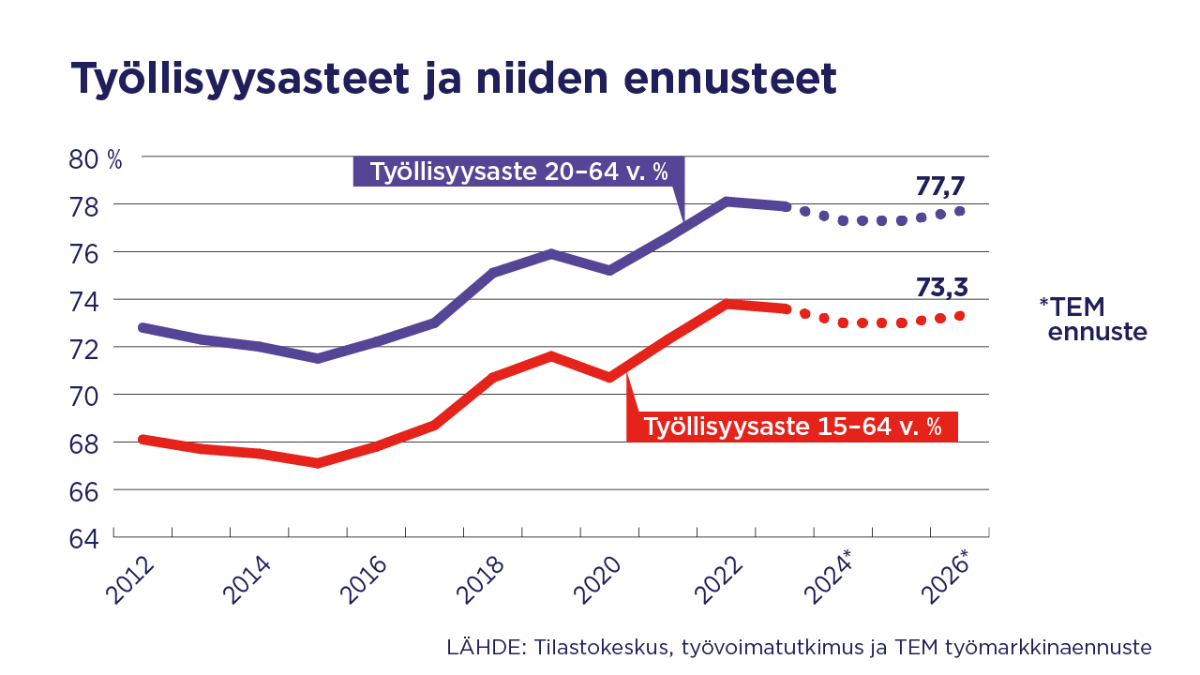
Kevään lyhyen aikavälin työmarkkinaennusteen mukaan työttömyyden kasvun huippu alkaa olla takanapäin. Pitkäaikaistyöttömyyden ennustetaan kasvavan vielä koko kuluvan vuoden ajan.
Liiketoimintakieltolain muutokset lausuntokierrokselle


Työ- ja elinkeinoministeriö pyytää lausuntoja esitysluonnoksesta liiketoimintakieltolain ja kaupparekisterilain muuttamisesta. Lausuntoja voi antaa 18.6.2024 saakka.

TE-palvelut 2024 -uudistus

TE-palvelujen järjestämisvastuu siirtyy kunnille 1.1.2025. Tavoitteena on palvelurakenne, joka edistää parhaalla mahdollisella tavalla työntekijöiden nopeaa työllistymistä.
TE-palvelut 2024 -uudistuksen verkkosivut
Yritystukien tietopalvelu


Yritystukien julkinen tietopalvelu sisältää tiedot myönnetyistä ja maksetuista tuista y-tunnuksittain. Tarkoituksena on tehostaa yritystukien läpinäkyvyyttä ja seurantaa sekä antaa tietoa tukien kohdentumisesta ja kehittymisestä.
Suomen kestävän kasvun ohjelma


Suomen kestävän kasvun ohjelma vauhdittaa kilpailukykyä, investointeja, osaamistason nostoa sekä tutkimusta, kehitystä ja innovaatioita. Sivuillemme on koottu tietoa TEM:n hallinnonalan rahoituskohteista mm. yrityksille suunnatuista hauista.
 Kotoutuminen.fi
Kotoutuminen.fi-verkkopalvelu kertoo kotoutumisesta ja pakolaisten vastaanotosta erityisesti työssään maahanmuuttaneita kohtaaville.
 Yt-asiamies.fi
Yt-asiamies.fi –sivustolla on kattava tietopaketti yhteistoiminnasta työpaikoilla sekä yhteistoiminta-asiamiehen toiminnasta.
 Rakennerahastot.fi
Rakennerahastot.fi on EU:n alue- ja rakennepolitiikan ohjelmien verkkopalvelu.
 SpaceFinland.fi
SpaceFinland.fi-verkkosivusto esittelee suomalaisia avaruusalan yrityksiä ja tutkimusta sekä Suomen avaruushallintoa.
 Kirjanpitolautakunta
Kirjanpitolautakunta.fi-sivustolta löydät työ- ja elinkeinoministeriön yhteydessä toimivan kirjanpitolautakunnan yleisohjeita ja lausuntoja.
 TalentBoost.fi
Talent Boost -ohjelma edistää kansainvälisten osaajien houkuttelua, maahanmuuttoa ja Suomeen juurtumista. Sivusto on suunnattu kaikille osaajien maahanmuuton parissa työskenteleville ympäri Suomen.





Arto Satonen
Työministeri
Wille Rydman
Elinkeinoministeri
Kai Mykkänen
Ympäristö- ja ilmastoministeri
Mari Rantanen
Sisäministeri